
At a glance
Three things to carry forward
- 01
Use individualized clinician guidance because delivery, complications, healing, and symptoms change readiness.
- 02
Begin with comfortable movement when appropriate, then progress one demand at a time according to response.
- 03
Stop for pain or concerning symptoms and keep sleep, feeding, caregiving, and support inside the plan.
01
Start with your own clinical guidance
Ask the obstetric or medical clinician responsible for your postpartum care what movement is appropriate now and what complications, symptoms, procedures, or restrictions change the plan. A vaginal delivery, cesarean birth, significant tearing, infection, blood-pressure complication, blood clot, hemorrhage, wound concern, pelvic-floor symptom, or other issue can require different guidance. Prior fitness does not cancel the need to account for the delivery and current recovery.
Useful questions include: What activity is suitable now? Are there lifting, impact, incision, blood-pressure, or pelvic-health considerations? Which symptoms require a call, a visit, or urgent care? Would pelvic-health physical therapy or another referral help? Follow the answer for your situation rather than a social-media schedule. A routine postpartum visit is not the only time you may contact the care team.
02
Treat recovery as useful work
Recovery includes healing, nourishment, hydration, sleep opportunities, medication, bowel and bladder comfort, feeding, emotional health, and the ordinary physical work of caring for a baby. Standing, carrying, feeding positions, floor transfers, stairs, appointments, and interrupted nights all add demand. These tasks matter even when they do not look like a formal workout.
Choose a goal connected to current life: a more comfortable walk, easier stairs, confidence getting to the floor, the ability to carry daily items without symptoms, or a steadier return to a familiar movement pattern. Body composition may change for many reasons across the postpartum period, but it is not a deadline or a measure of worth. Adequate recovery can be the primary training decision on a difficult day.
03
Progress by response instead of a fixed timeline
- 01
Find a comfortable baseline.
Use clinician-approved daily movement, breathing, position changes, or short walking and notice pain, bleeding, pressure, leakage, dizziness, fatigue, and recovery.
- 02
Repeat before adding.
Let the current amount become predictable enough to judge rather than changing duration and difficulty every session.
- 03
Add one demand.
Increase a little time, another short session, range of motion, or light resistance while keeping the other variables steady.
- 04
Reassess the full response.
Reduce the dose and contact the appropriate clinician when symptoms appear, increase, persist, or interfere with daily function.
ACOG notes that people with an uncomplicated pregnancy and vaginal birth may be able to begin some activity when they feel ready, while people with a cesarean birth or complications should ask their ob-gyn when it is safe. That distinction is a reason to individualize, not a schedule for self-clearance. Vigorous training, running, jumping, and heavy lifting require the capacity and guidance appropriate to your recovery.
04
Rebuild strength around daily demands
When cleared, begin with movements you can coordinate and recover from, such as a supported squat to a chair, elevated push, light row, hinge pattern, or carry suited to current capacity. Exhale without straining, keep the load manageable, and use a range that does not provoke symptoms. Daily baby care involves repeated lifting and sustained positions, so the gym plan should leave capacity for life rather than exhausting it.
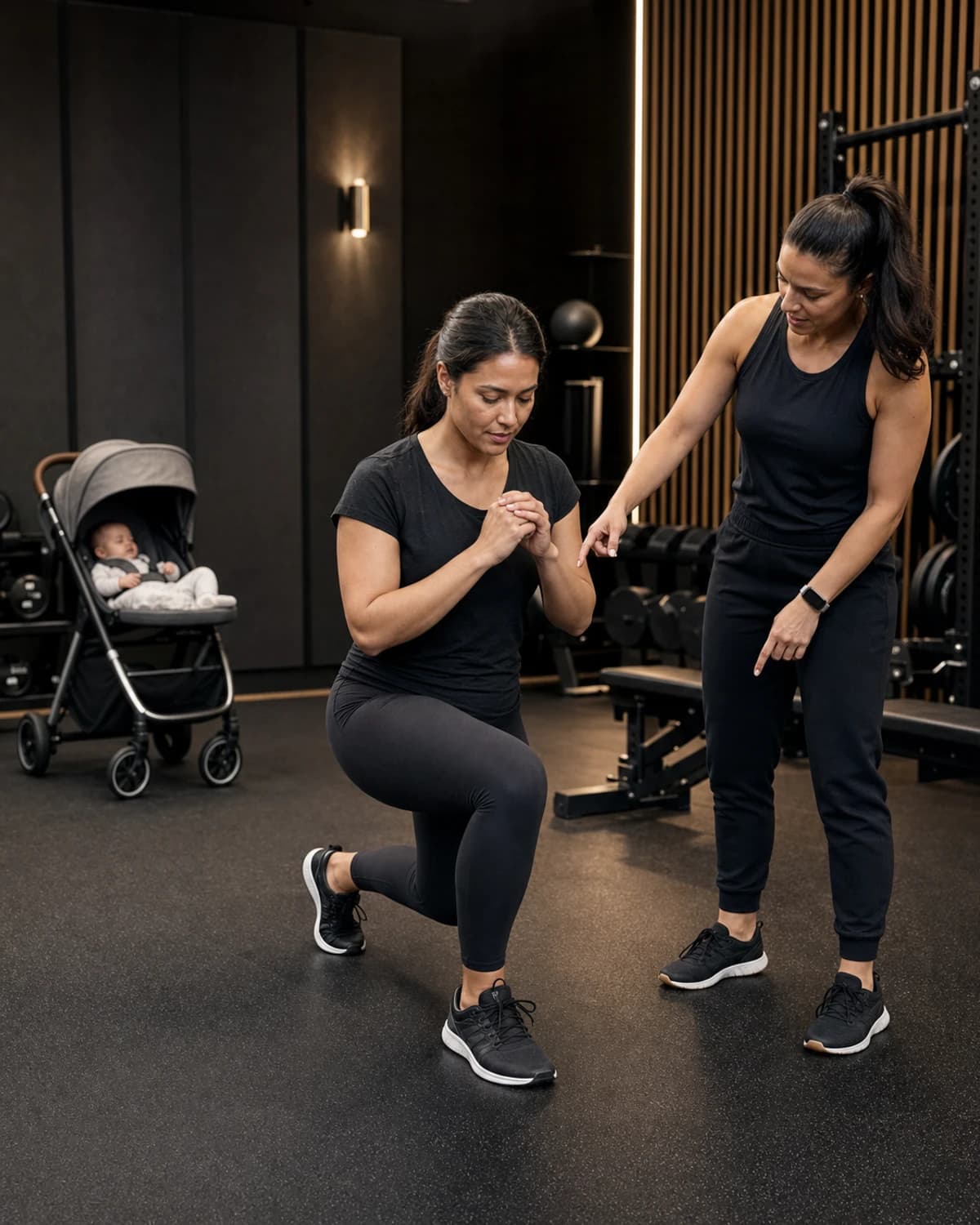
A qualified personal trainer works within your clinician's clearance and can organize general strength, adjust exercises, and progress load gradually. The trainer does not provide postpartum rehabilitation, assess an incision, diagnose abdominal separation, or treat pelvic-floor symptoms. A pelvic-health physical therapist or another qualified clinician may be appropriate when pain, pressure, leakage, bowel symptoms, sexual pain, or movement concerns need assessment.
- Keep at least a few repetitions in reserve instead of training every set to failure.
- Change the setup, range, support, or load when holding your breath or losing control becomes the only way to continue.
- Use low-impact conditioning first when impact causes pressure, heaviness, pain, leakage, or a marked symptom change.
- Coordinate harder sessions with the support and sleep available rather than assuming every week can progress.
05
Build sleep, feeding, and support into the plan
Interrupted sleep can change coordination, effort, mood, and recovery. Use a lighter session, shorter walk, mobility, or rest after a very difficult night. Feeding schedules and comfort may affect clothing, timing, hydration, and where exercise is practical. Follow your clinician's nutrition and hydration guidance and avoid aggressive restriction, especially when lactation, healing, medication, or a health condition is involved.
| Constraint | Practical adjustment | Support request |
|---|---|---|
| Unpredictable naps | Use a short session with a clear stopping point | Ask someone to cover one planned window |
| No travel time | Choose a home or neighborhood option | Prepare a small training area or stroller route |
| Very limited sleep | Reduce demand or recover | Share a feeding or care task where possible |
| Return to work | Place brief sessions around the real commute | Protect one calendar appointment and backup |
Support is not a luxury item in the program. Ask directly for a meal, ride, childcare window, household task, walking company, or help contacting care. In Atlanta, traffic, heat, air quality, uneven routes, and childcare access can change an outdoor plan; use a safe indoor alternative when conditions do not support the intended session.
06
Stop and respond to postpartum symptoms
Stop if you feel pain. Contact the appropriate clinician for bleeding that increases with activity, incision or wound changes, fever, dizziness, persistent headache, pelvic heaviness or pressure, urinary or bowel symptoms, breast redness with fever, new weakness or numbness, or symptoms that recur whenever activity increases. Prompt attention is also appropriate whenever you feel something is wrong, even if it is not on a list.
Symptoms are information, not evidence that you failed. Record what you were doing, when the symptom began, how long it lasted, and any related changes so the clinician has useful context. Pause progression until you understand the next safe step. Exercise coaching resumes only within the guidance that follows.
Useful context
Frequently asked questions
When can I start exercising after birth?
There is no single answer for every delivery and recovery. ACOG notes that some people after an uncomplicated vaginal birth may begin activity when they feel ready, while cesarean birth or complications require individualized guidance from the ob-gyn. Ask the clinician responsible for your care.
Is walking a reasonable place to begin?
Often, when your clinician agrees and walking does not provoke symptoms. Start with a comfortable route and duration, account for heat, terrain, stroller handling, and fatigue, and shorten the walk if the response during or afterward is not manageable.
What if I have leaking, pelvic pressure, or pain?
Stop or reduce the activity and contact an appropriate postpartum clinician. Those symptoms should not be normalized or pushed through. Pelvic-health physical therapy may be useful when recommended, and a trainer should remain within the resulting guidance.
Can a personal trainer design my return plan?
After clearance, a qualified trainer can organize general exercise, adapt movement, and progress training gradually. The trainer cannot diagnose complications, provide rehabilitation, or replace obstetric, medical, or pelvic-health care.
Official references
Sources and further reading
- American College of Obstetricians and GynecologistsExercise After Pregnancy↗
- Centers for Disease Control and PreventionUrgent Maternal Warning Signs and Symptoms↗
- Office of Disease Prevention and Health PromotionPhysical Activity Guidelines for Americans↗