
01
Make activity feel like progress
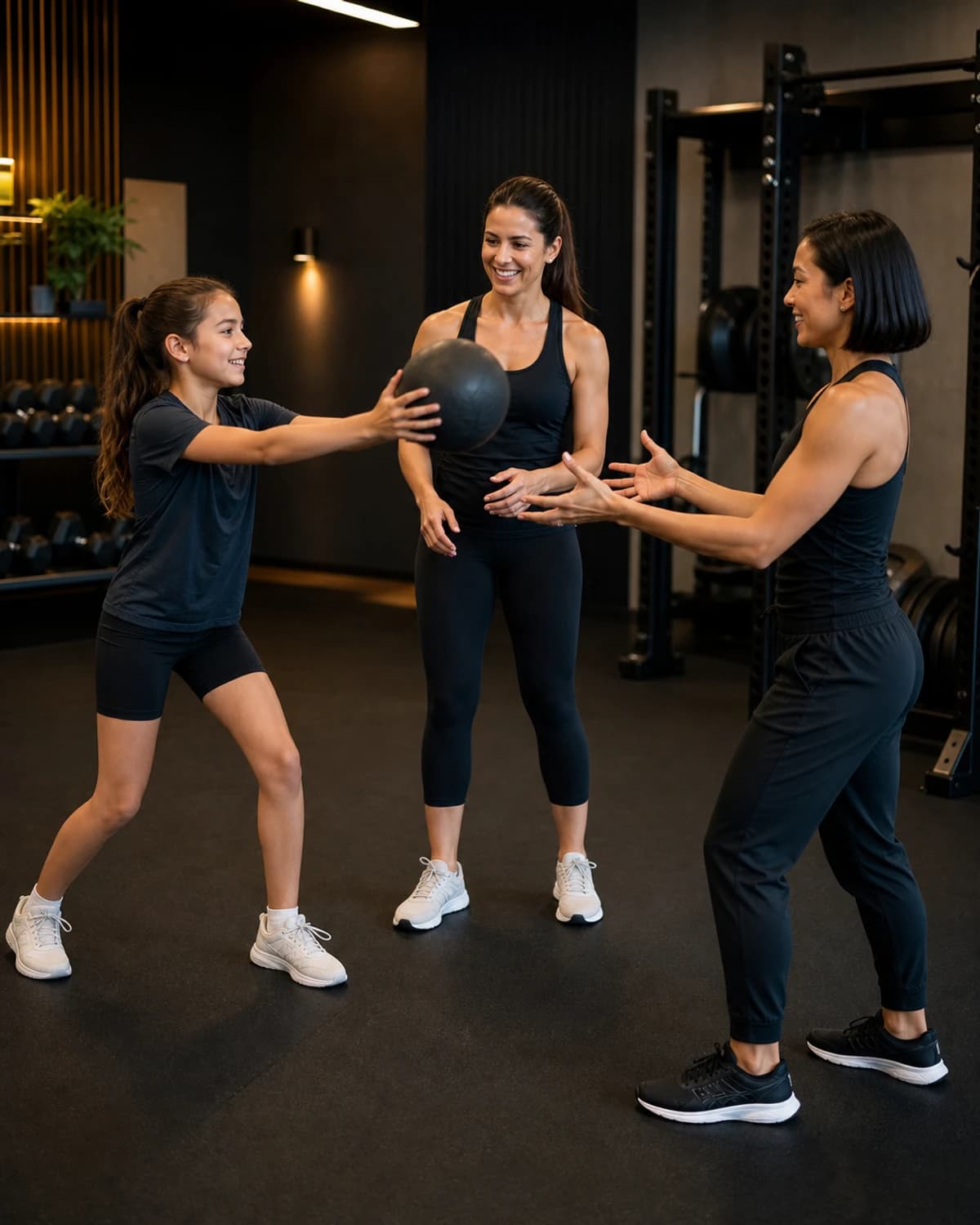
Young people are more likely to stay engaged when movement is varied, age-appropriate, and enjoyable. Coaching can support coordination, confidence, strength foundations, and sports preparation without turning exercise into punishment.
02
The family shapes the environment
Walks, active games, recreation, and shared routines can make movement a normal part of family life. Adults can model consistency without commenting negatively on a child’s size or food choices.
03
Health questions belong with a clinician
Concerns about a child’s growth, weight, pain, medical condition, or nutrition should be discussed with a pediatric healthcare professional. A trainer does not diagnose or prescribe a diet for a child.