
At a glance
Three things to carry forward
- 01
Let play and choice lead so each family member has a realistic way to participate.
- 02
Model movement as care, connection, and skill practice—not payment for food or a comment on appearance.
- 03
Match the activity, environment, water, equipment, and supervision to each child's age and needs.
01
Offer play and real choices
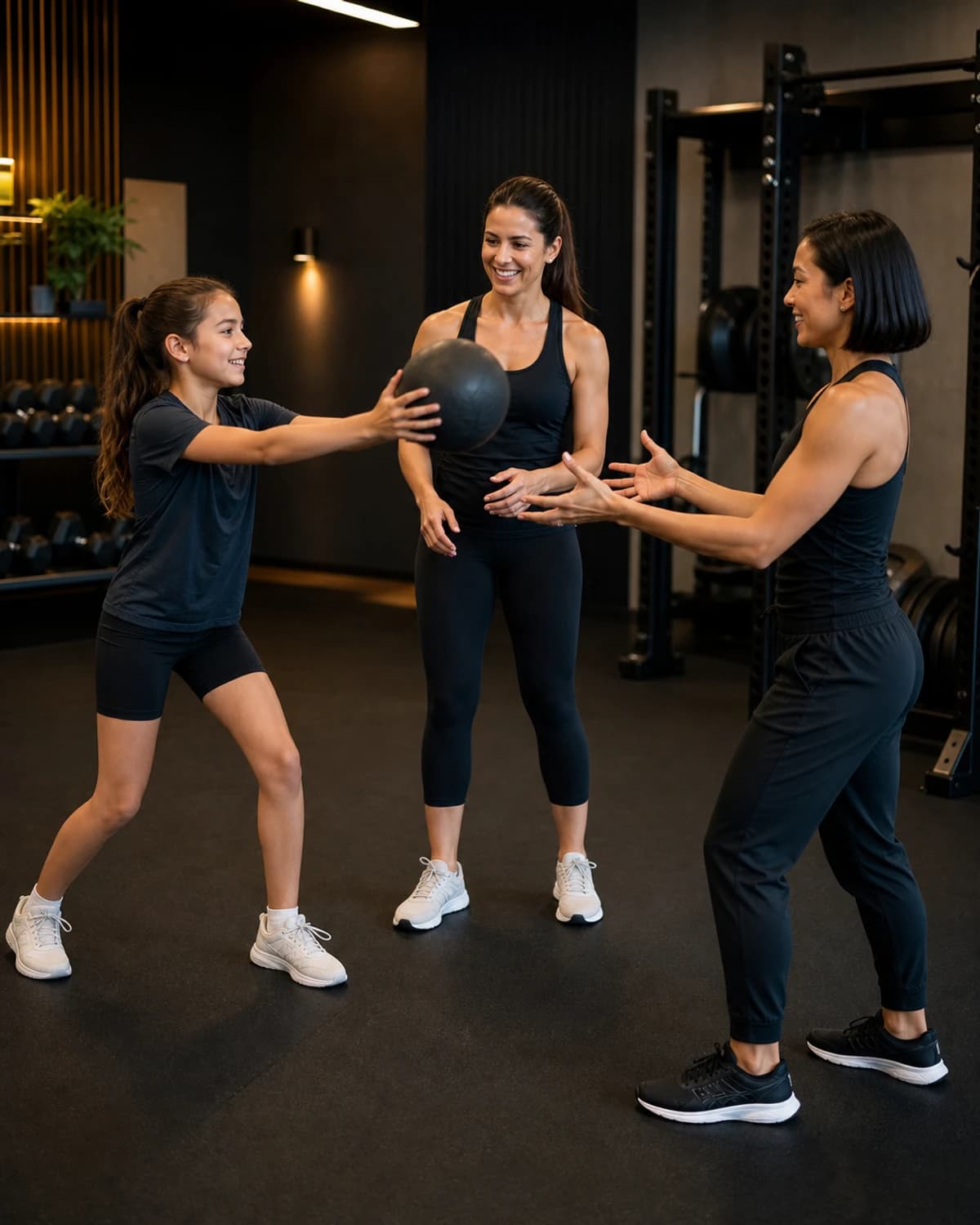
Children are more likely to join movement that has a clear element of play, choice, or connection. Offer two or three workable options rather than announcing a mandatory workout. A young child may follow an imaginative obstacle course while an older child chooses music for a dance break. Someone who does not want the main activity can keep score, set up cones, roll a ball, or take a shorter route.
Choice still needs adult boundaries. Offer only activities that fit the available space, weather, equipment, time, and supervision. Let children change pace, take breaks, or stop without teasing. The shared goal is participation and a positive experience, not identical effort. Avoid comparing speed, coordination, endurance, body shape, or willingness between siblings or adults.
02
Let adults model a healthy relationship with movement
Children notice how adults describe movement. Say, “That walk helped me clear my head,” “I am practicing my balance,” or “My body needs an easier day.” Those phrases show that activity can serve many purposes and that capacity changes. Adults do not need to pretend every session feels exciting; calmly using a shorter option also models adaptability.
Keep body criticism, food morality, and punishment out of the routine. Do not send a child to run because of behavior, require activity after dessert, or praise one body type as evidence of fitness. Celebrate cooperation, learning, courage, creativity, and kindness. If competition is enjoyable, build in mixed teams or cooperative goals so the same child is not repeatedly singled out.
04
Adapt indoor and outdoor options for access
- Indoors: try a scavenger hunt, balloon tap, freeze dance, follow-the-leader route, sock toss, or movement story with clear space around furniture.
- Outdoors: use a walk, chalk course, playground, garden task, bike or scooter ride with protective equipment, or a simple catch game where the setting is suitable.
- For different mobility needs: shorten the route, use a stable seated position, roll rather than throw, move one limb at a time, or choose a helper role that still supports participation.
- For sensory needs: preview noise and crowds, offer a quieter time or place, let the child choose music volume, and keep a predictable stopping point.
- For mixed ages: change distance, object size, rules, and turns instead of asking a younger child to perform the older child's version.
Free and simple can still be meaningful. Expensive classes are optional, and organized sports are only one path. If a child enjoys structured instruction, choose a program with appropriate staff, communication, safeguarding practices, and adaptations. Ask how the program handles breaks, inclusion, equipment, emergencies, and caregiver questions before enrolling.
05
Plan hydration, supervision, and stopping points
Make water available before, during, and after active play, especially in heat. Schedule shade and rest, use sunscreen or weather protection as appropriate, and avoid the hottest part of the day when conditions are unsafe. Check shoes, helmets, bikes, play equipment, traffic, water depth, and the activity area. Young children need close supervision; older children still need boundaries that match the setting and their experience.
06
Involve a pediatric clinician when health is the question
Children grow on individual trajectories. If you are concerned about growth, appetite, sleep, pain, fatigue, breathing, development, medication, or participation, discuss the full context privately with a qualified pediatric clinician. Do not make one child follow a restrictive adult diet or prescribe exercise to change the child's body. Evidence-based family healthy-weight programs are healthcare and community interventions, not home quick fixes.
Protect the child's trust while seeking help. Ask how movement feels, listen for bullying or embarrassment, and avoid discussing adult concerns in front of siblings or peers. A qualified youth fitness coach can adapt games and teach skills, but does not diagnose health conditions or direct medical care. The child should remain a person to support, not a project to manage.
Useful context
Frequently asked questions
How long should a family activity session be?
Use a length the family can join safely and enjoyably. Ten active minutes may fit a school night, while a weekend outing may last longer with breaks. Children also move through play, school, and activities across the day.
What if family members have very different ages or abilities?
Keep the shared theme but change each person's distance, pace, object, range, role, or number of turns. Participation does not require everyone to perform the same version or remain active for the same duration.
Should I require a child to exercise?
Caregivers can create regular opportunities and safe boundaries, but shame and punishment undermine the purpose. Offer limited choices, model participation, explore what the child enjoys, and involve a pediatric clinician when health or development is a concern.
What should we bring for outdoor family movement?
Bring water, weather-appropriate clothing, needed medication as directed, and activity-specific protective equipment. Check the route, traffic, surface, temperature, restroom access, and the supervision needs of each child before starting.
Official references
Sources and further reading
- Centers for Disease Control and PreventionChild Activity: An Overview↗
- Centers for Disease Control and PreventionPreventing Childhood Obesity: 6 Things Families Can Do↗
- Centers for Disease Control and PreventionFamily Healthy Weight Programs↗